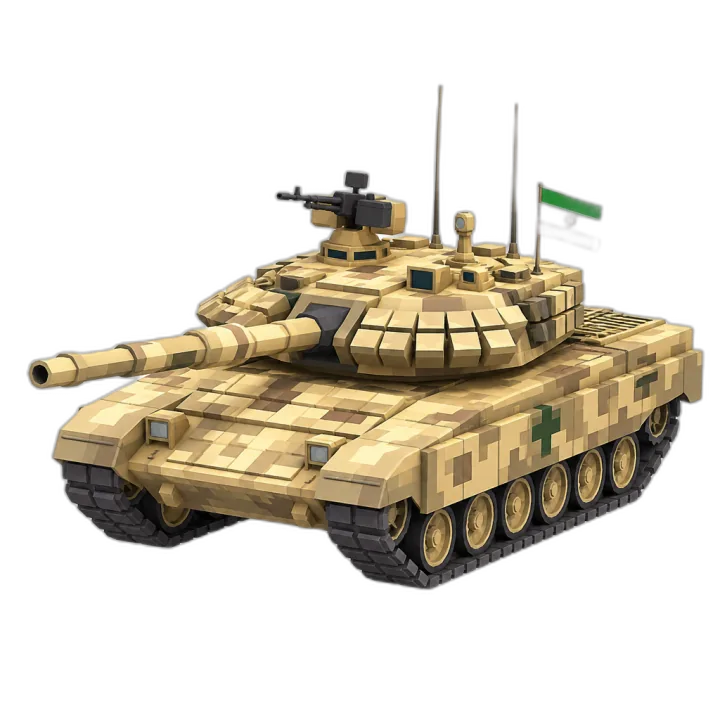
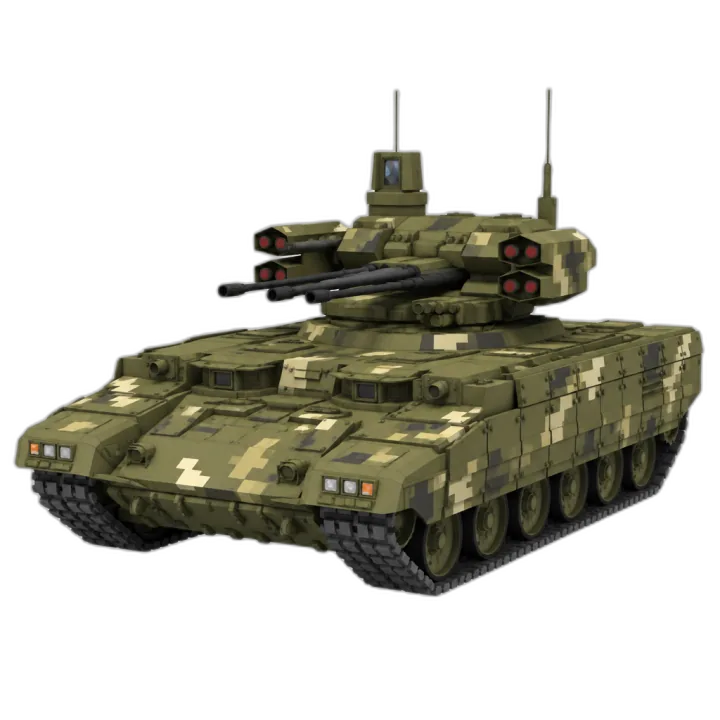
A player prompts for the game asset they want and gets it back rigged, balanced and ready to play. We already have it running inside a full RTS, playable end to end.
▶ The player writes the unit they want and the engine builds it · an illustration of the pipeline · the real capture is further down
Type to create
>
text → image · image → mesh · rig + balance · in the build183 units and buildings in the build, every one generated from a prompt
M1A2 · USA
Su-57 · Russia
AH-64 · USA
Leopard 2 · EU
● · The short version
What it is
GameGen is the creation layer: a player types a prompt and gets back a unit that is rigged, balanced and on-model, playable in seconds. DoctrineStrike is the first title running on it.
The proof
The game plays end to end, in pre-alpha. 183 units and buildings, every one of them generated by this pipeline, inside the real build. Everything below is captured footage, not a mockup.
The round
A round for an 18-month runway to launch and the numbers that unlock a Series A, part of it non-dilutive, on top of the 4% ZEC tax regime. Size and terms are shared in the meeting.
Why now
The Steam page goes public on 15 October 2026. Roblox proved players will build and AI made building programmable. Nobody holds the middle yet.
The most loyal RTS community in gaming has waited 23 years.
One of gaming's most storied RTS franchises built one of its most loyal communities, and it is still waiting for a true successor. Twenty-three years on, the fans keep the classics alive with mods.
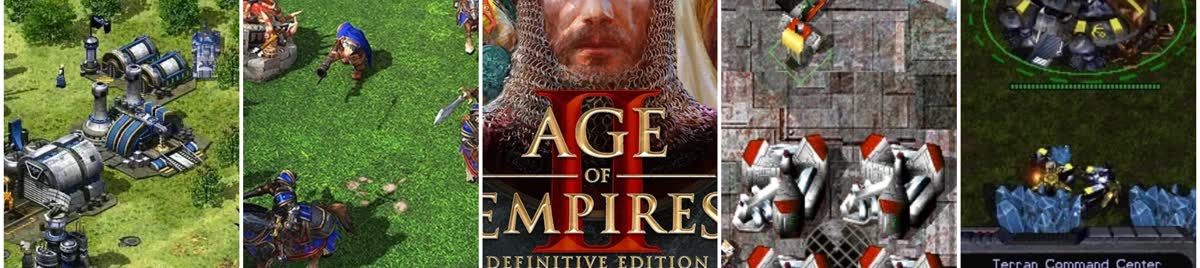
▦ the classics this community still plays
▦ the orphaned genre · last new title per franchise · remasters and re-releases excluded
16years with no new modern military base-builder
Drag through the years2026
three franchises come back, and not one of them is a modern military base-builder
Total Annihilation1999
Dune · Westwood2001
Warcraft III2003
Ground Control2004
Earth 21502005
Rise of Nations2006
Act of War2006
World in Conflict2007
Empire Earth2007
Red Alert2009
StarCraft2010
Supreme Commander2010
Command & Conquer2010
Age of Empires2021
Company of Heroes2023
Homeworld2024
Drag to see it allthe genre is still shipping · nobody publishes a new one · three franchises come back, and not one of them is a modern military base-builder
Attention1.9Mviews on a single mod video
Effort369mods published for one 2003 game
Play~3,000concurrent players on 2000-2003 classics
Zero Hour is the third most-visited game on ModDB out of 78,355, twenty-three years after release. Its biggest mod has 2.4 million downloads, and took 39 more the day this was measured.
Why nobody has filled the gap
2010the last one shipped
A sequel nobody ships
Not one franchise. A whole genre: sixteen classics, and the last new modern military base-builder shipped in 2010. The demand never went anywhere.
€0what the people keeping it alive get paid
Modding is the demand signal
Every one of those numbers is unpaid expert work keeping a 2003 game alive: demand paid in the most expensive currency there is. And it is locked behind professional tools — the exact lock GameGen removes.
0shipped titles that let players generate
Raw generation breaks games
Unconstrained output drifts off style, off scale and off the rules. That is why no shipped title lets its players generate.
The gap: a community waiting for its game, players wanting to create, and no title that delivers either, let alone both.
Concurrent players and franchise dates verified Jul 2026 (Steam, SteamCharts, CnCNet). Last new title excludes remasters and re-releases.
02 · The solution
Generation stops being a tool. It becomes a mechanic you play.
DoctrineStrike began as the game we were waiting for ourselves: a complete, classic-style RTS. Then we went further: an in-game workshop where any player prompts units, skins and whole factions, and GameGen returns them rigged, balanced and on-brand. What a modder did in weeks, a prompt does.
▶ one prompt → a playable unit · real capture, long waits sped up
▶ the real game · live gameplay, pre-alpha
Today · studios~thousands
DoctrineStrike · players100s of millions
Same model, orders of magnitude more users, the moment generation becomes a game mechanic.
Safety and scope, in detail
2safety layers, always on
Safe by construction
Prompt rails, an AI referee and balance-locked stats mean player content always fits the game. The safety layer is the product.
5bounded templates keep it readable
A genre with room for a platform
Five bounded templates and a top-down RTS camera keep player creations readable and safe to ship: the friendliest possible arena for consumer-scale generation.
03 · The product
AI art that lives inside the game.
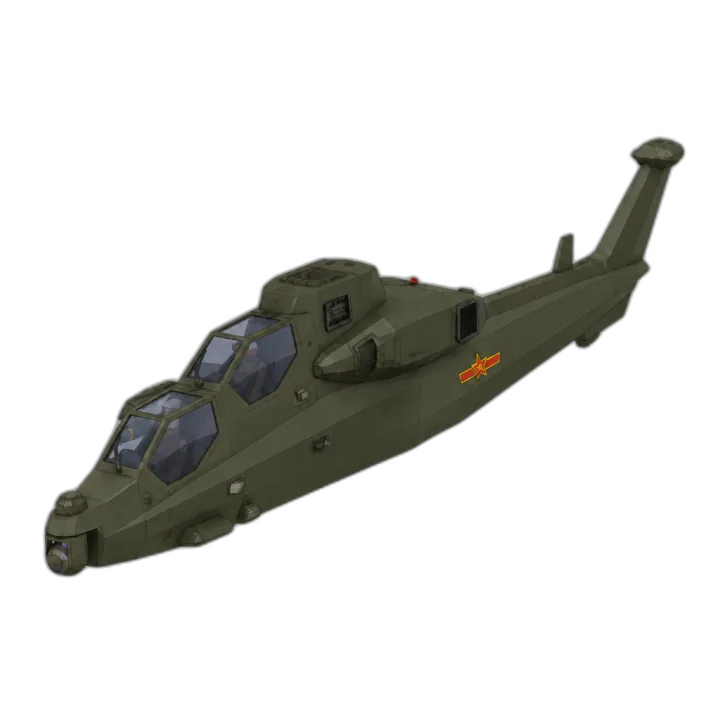
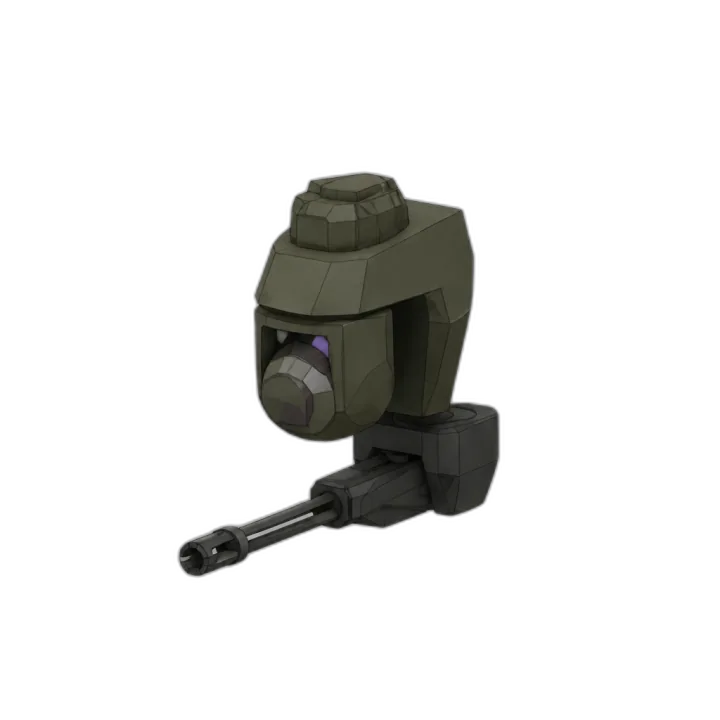
ComfyUI is a brilliant engine inside a clumsy product: a separate app, inconsistent output, experts only. We closed that gap. Every stage is a clean drop-in slot inside Unity, driven by one shared style. Prompt → sprite → mesh → rigged prefab, scaled to its class and wired to play.
body
rotor · spins
gun · auto-aim
missiles · fire
Live capture · the Multipart Builder turning static art into a combat-wired unit
behind the scenes · the real pipeline forging a unit end-to-end, inside the engine (loads trimmed)
you type: "soviet tank"
engine adds: style · role · framing · class scale
(constructed server-side, never shown)
The author writes the subject. The engine appends style, role, framing and class scale before the model ever sees it — which is why nothing drifts off-model and everything snaps into its slot already combat-wired. Full prompt construction and referee spec: available under NDA.
04 · The market
Player-creators already make billions.
The market already exists: Roblox and Fortnite pay player-creators billions a year. But those players only assemble pre-made blocks, because nobody lets them generate. We do, and every generation is a paid transaction the studio shares in.
The Epic playbook, but the skins are generated.
Unreal made Epic a company. Fortnite skins made it a giant. A free game turned cosmetics into one of the biggest money machines in entertainment:
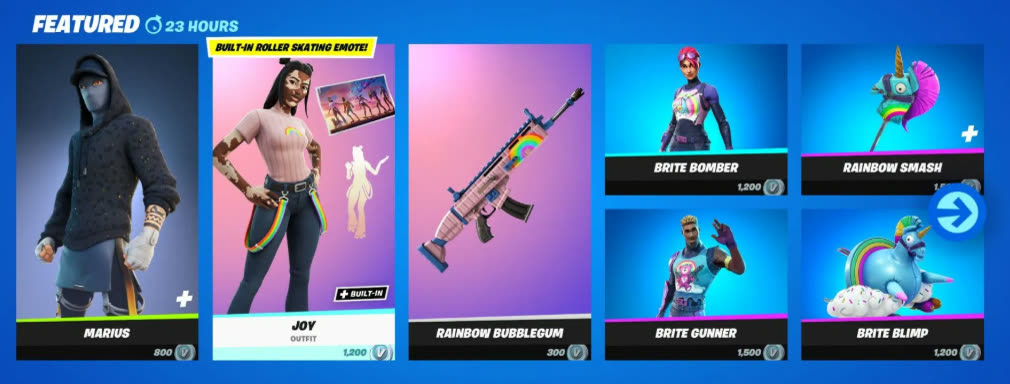
▶ Fortnite's Item Shop · a fixed catalog of studio-made skins players pay for · we make it infinite & player-generated
The Fortnite and Roblox numbers
$26B+
Fortnite revenue since launch, almost all of it cosmetics.industry estimates · directional
$0
Price of the game. Free-to-play, funded entirely by skins & the battle pass.
~1,900
Skins in the catalog, every one hand-made by Epic's art team.
Didn't this community reject free-to-play once already?
It rejected a reboot that replaced the finished game with pay-to-win. DoctrineStrike ships the complete RTS for free and sells only player-generated cosmetics, with combat stats balance-locked: paying never buys power. That is the Fortnite lesson the cancelled reboot missed.
*third-party estimate
25 yrs
Built on the modding king
The genre's defining classic stayed alive 25 years on mods, without ever getting a remake. We rebuilt that style of RTS and replaced “wait for a modder” with “prompt it yourself.”
Face scan
The appetite is proven
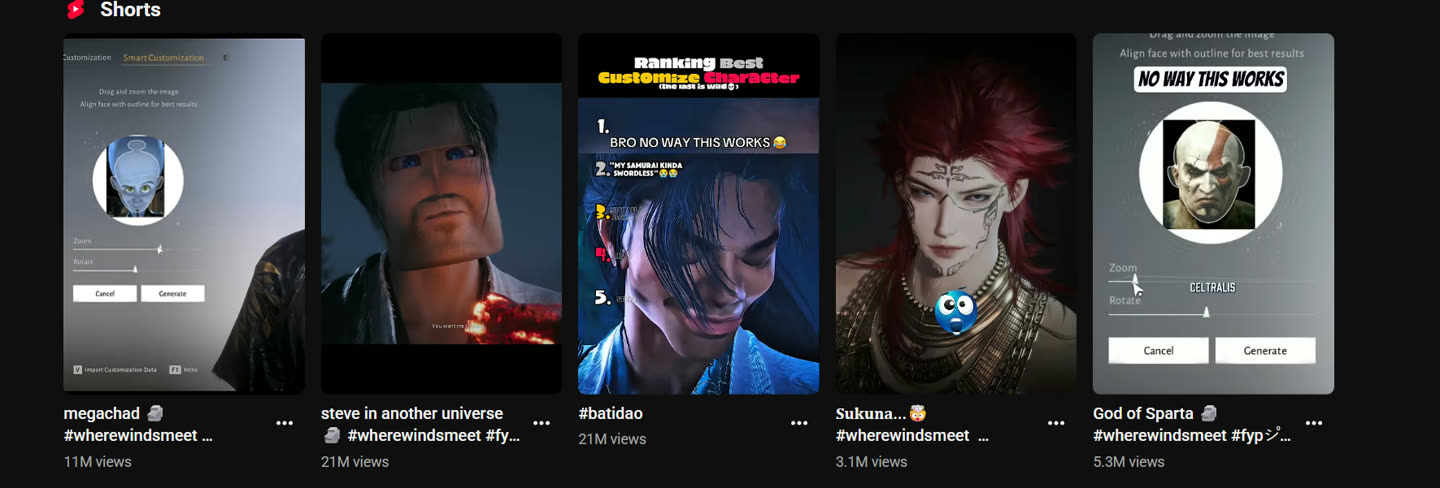
The face-scan in Where Winds Meet turns a photo into your in-game character, and that one cosmetic feature filled YouTube with clips. DoctrineStrike regenerates the whole unit: weapon, skin, faction.
▶ YouTube · #wherewindsmeet “face scan” · one feature, clip after clip in the tens of millions
05 · The business model
Three revenue lines, all denominated in credits.
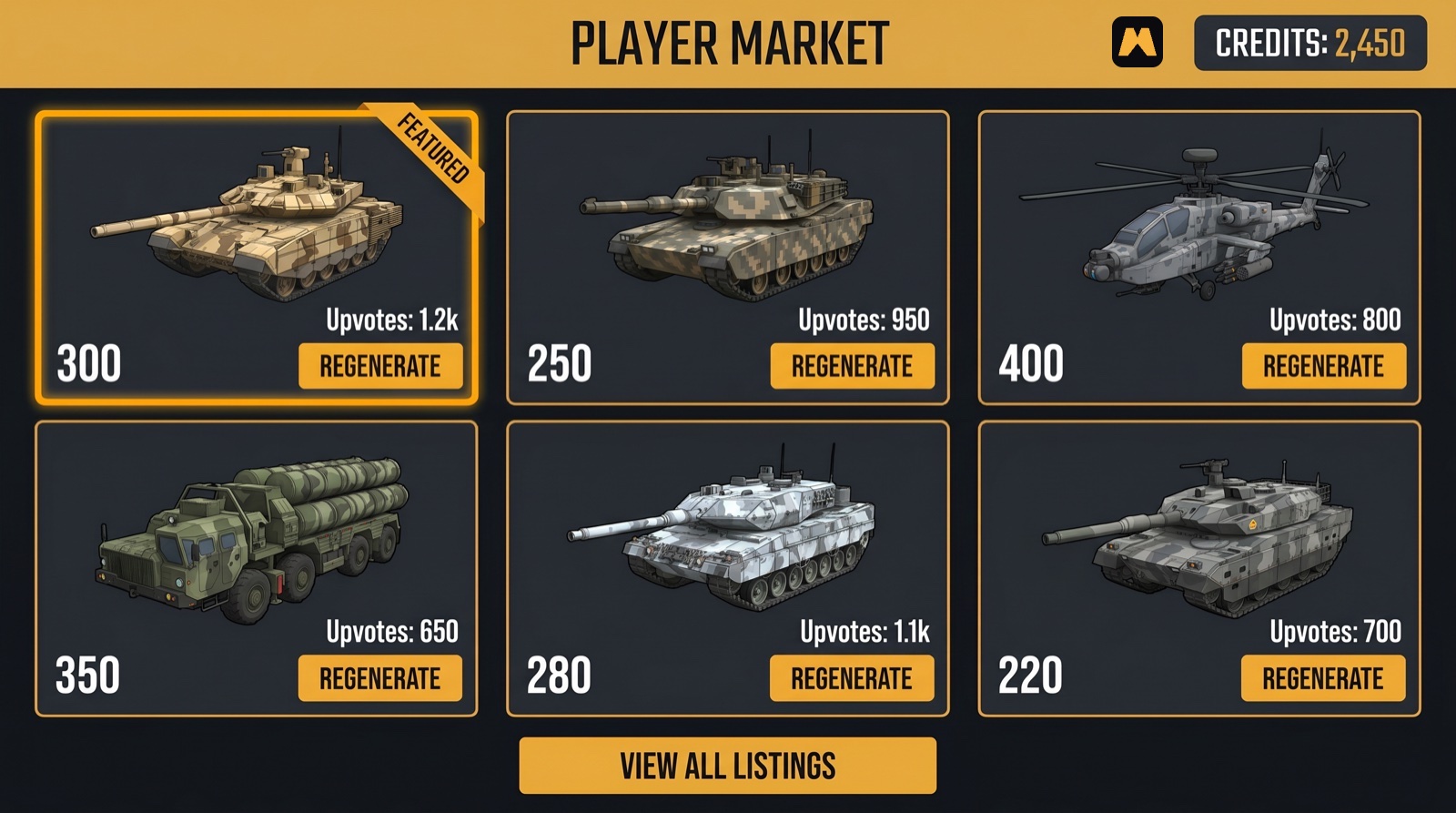
▶ the DoctrineStrike Player Market · at launch, concept in the game's UI · every listing is a prompt, every purchase re-generates on the partner's model
The in-game currency is the partner's credit.
Fortnite runs on V-Bucks, and V-Bucks built Epic. DoctrineStrike mints no coin of its own: every price is denominated in partner credits, so every player balance is an account with the partner. The studio earns a share of every generation.
The three revenue lines, in detail
In the build today
Players pay to create
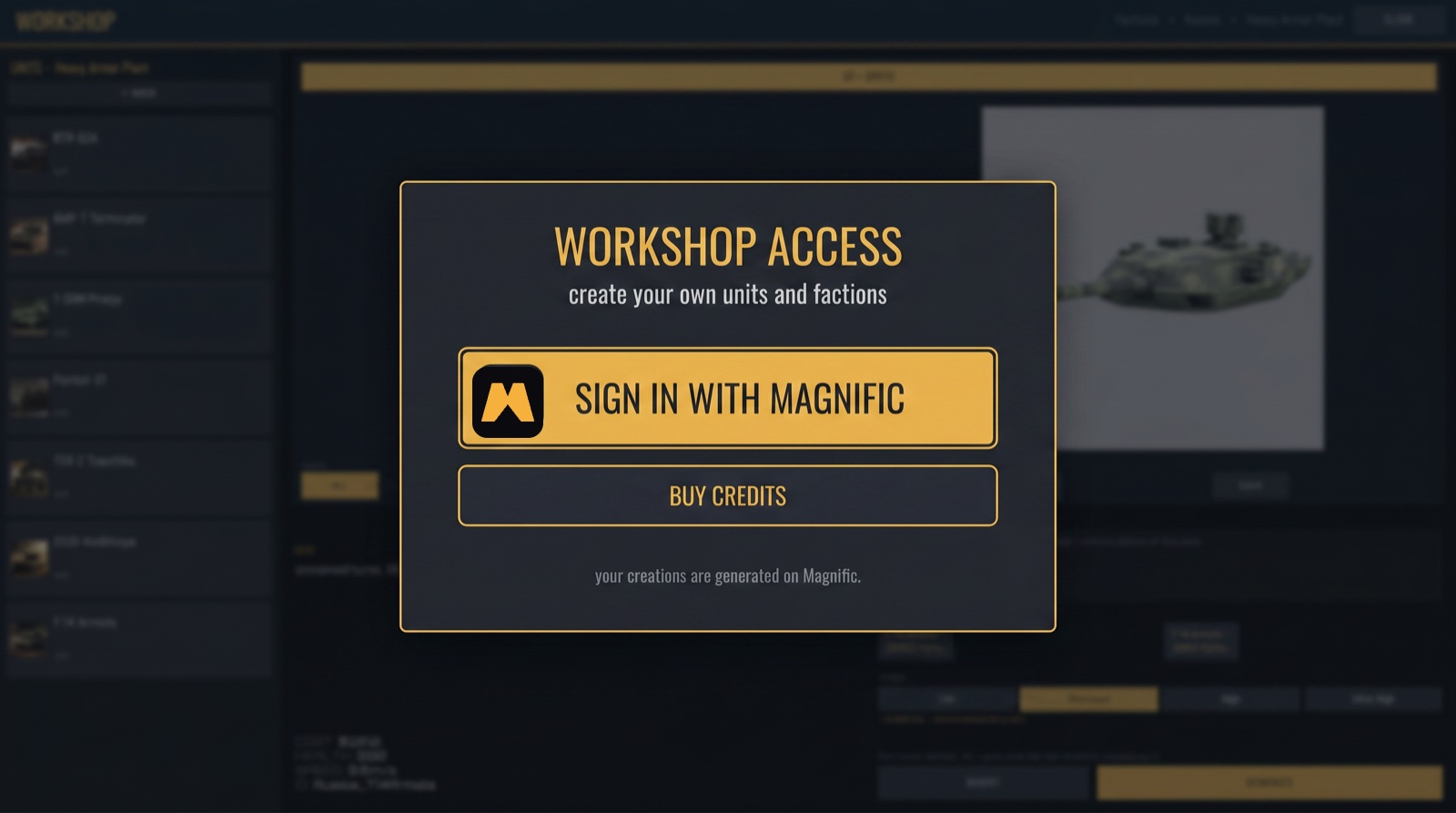
Players sign in with the partner inside the workshop and buy credits; the studio earns a revenue share on every credit spent in-game. Quality tiers (low → ultra) and one-tap revert both trigger fresh generations: the more players create, the more everyone earns.
At launch
The prompt exchange
Players share the prompt, not the asset — the Roblox/UEFN loop with the copy step made paid. Browsing and copying are free, but owning the unit re-runs the prompt on the copier's own account: one upload, zero free downloads, a thousand paid generations.
The roadmap
More games, more calls
GameGen can license into other titles. Each new game brings new players and a new revenue line, and every new player brings more generations. The loop compounds.
The unit economics, measured on the live pipeline.
Unit economics, per generation
$1–2
Raw generation cost of a complete building: concept art, damage states, rubble, wired into the game.measured on the live pipeline · July 2026
$7–14
A full seven-building faction, destruction included. The deepest hook in the workshop costs less to serve than a AAA skin costs to make.
$100
Of raw compute buys roughly 7 to 14 complete factions. At $4–5 a unit against $1–2 of cost, the gross margin runs 62 to 70%. Below $4 it stops being a software margin.
Market size and comparables
$7.2B
GenAI-for-3D by 2029, up from $1.9B in 2024 (~31% CAGR).The Business Research Company · directional
~$24B
UGC-gaming market by 2032, the category GameGen sits inside.6Wresearch · directional
Cents each
An image generation costs pennies; a full rigged 3D unit costs more, scaling with detail. Per player it stays tiny, and the volume is massive.
The numbers, as a sensitivity modelNot a forecast. What has to be true.
Scenario
Players
Create
Revenue
Gross margin
Pessimistic
50k
6%
$156k
64%
Base
200k
10%
$2.2M
64%
Optimistic
500k
15%
$17.4M
73%
At $4–5 per generation against a measured cost of $1–2. Everything hangs on one assumption: that 6 to 15% of players create, against Roblox’s 3.1%. There, creating means building a game. Here it means writing a sentence.
06 · The creator economy
From developers to players.
DoctrineStrike ships an in-game Level & Faction Editor where players generate their own tanks, units and whole factions, behind a partner sign-in. Every creator-player becomes a customer of the partner: modding turned into one click.
01Prompt itin the workshop
02the partner generatesrigged · on-brand
03Play itseconds later
04Share the promptmarketplace
05Others remixnew generations
↺ every pass through the loop runs on the partner's model
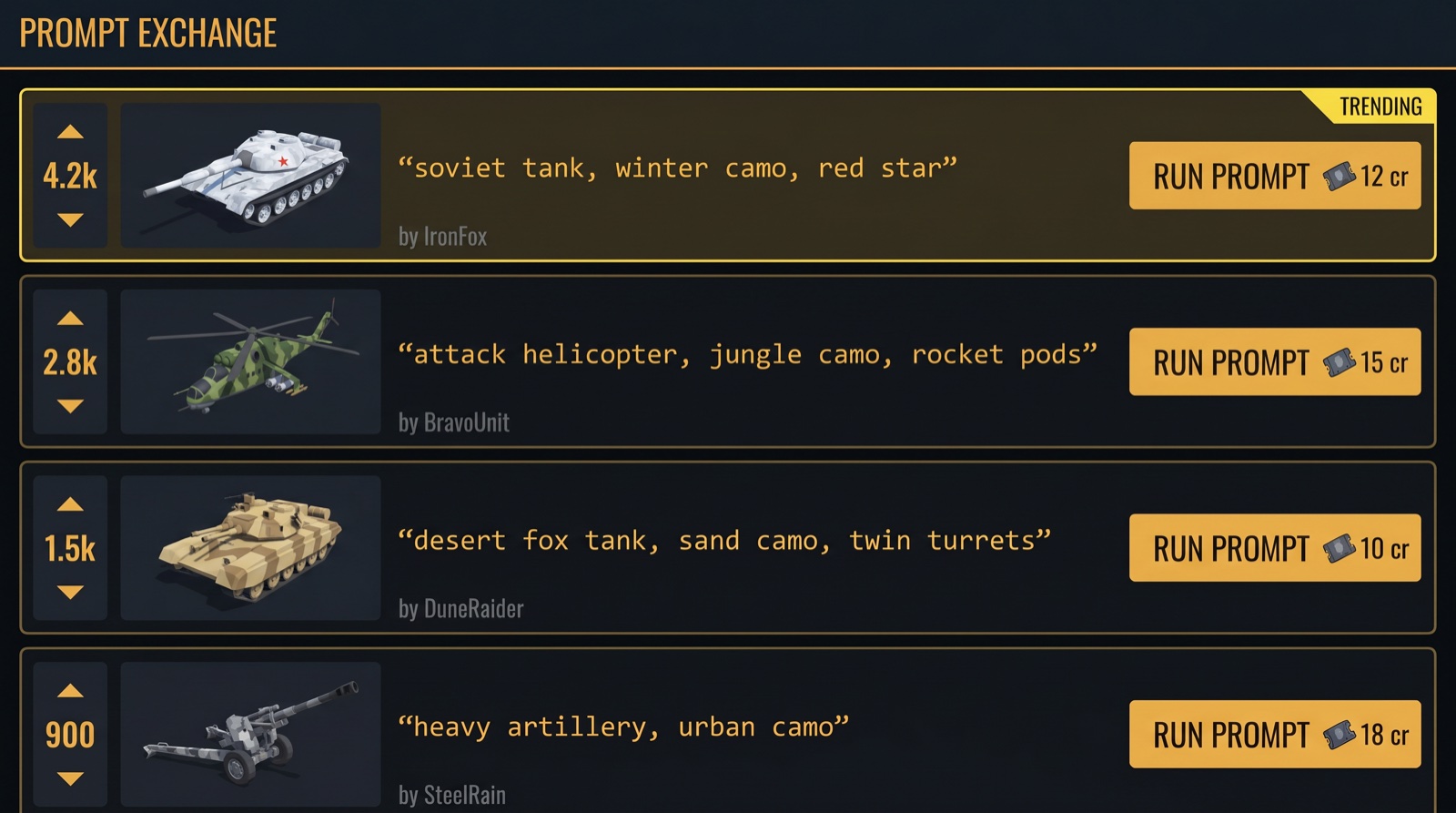
The prompt exchange: sharing is free, owning it costs a generation.
Creations spread through a community hub: a Reddit-style feed of prompts and result shots. Sharing costs nothing. Fielding a shared unit runs its prompt again, and that run is a fresh paid generation.
▶ the prompt exchange hub · concept in the game's UI · browsing and voting are free, RUN PROMPT is a paid generation
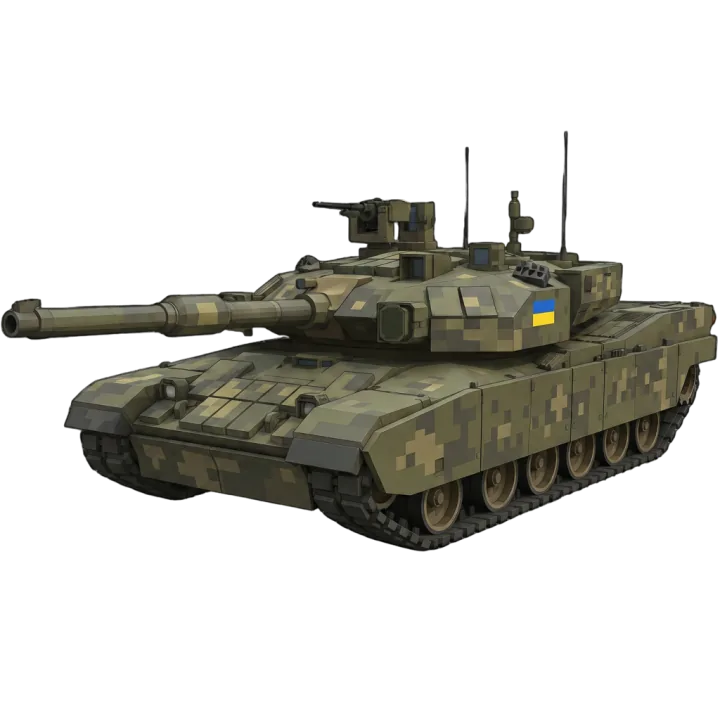
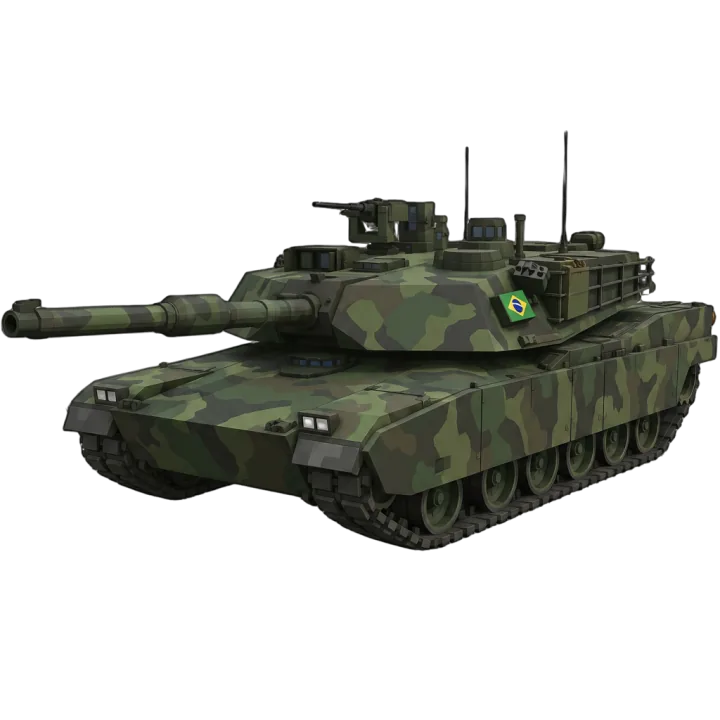
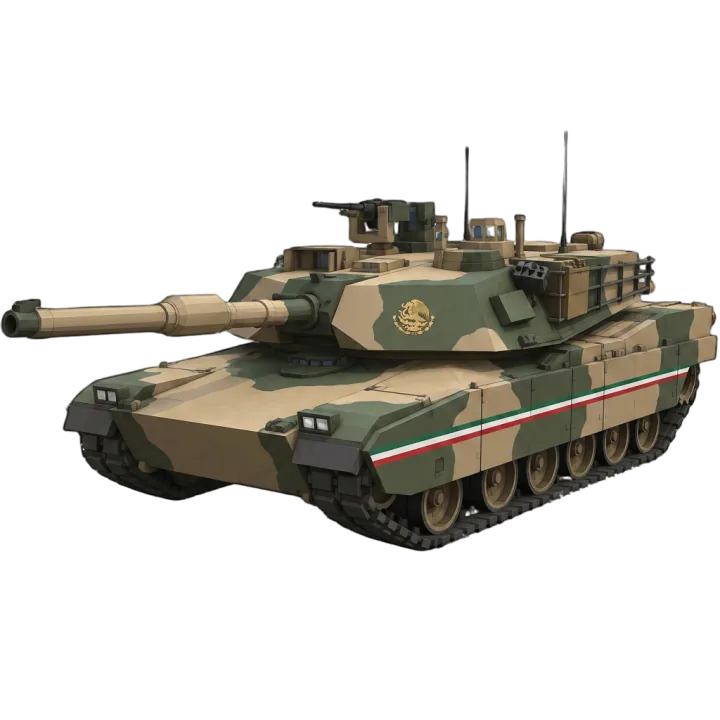
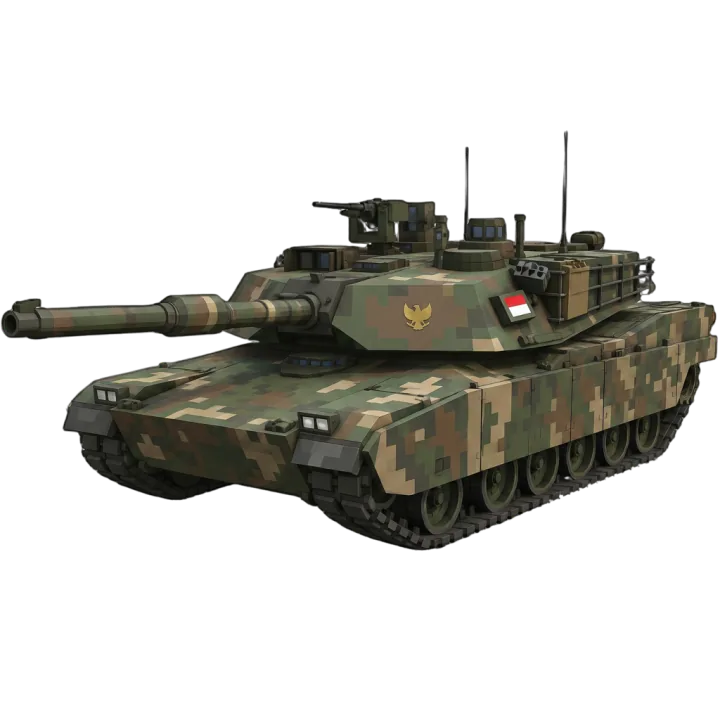
A skin is one generation. A faction is hundreds.
The deepest hook: building a whole faction, your own country's army included. Every unit, building and weapon is generated to match, with stats cloned from an existing faction so balance never breaks. A committed creator can spend more on one faction than on a full-priced game.
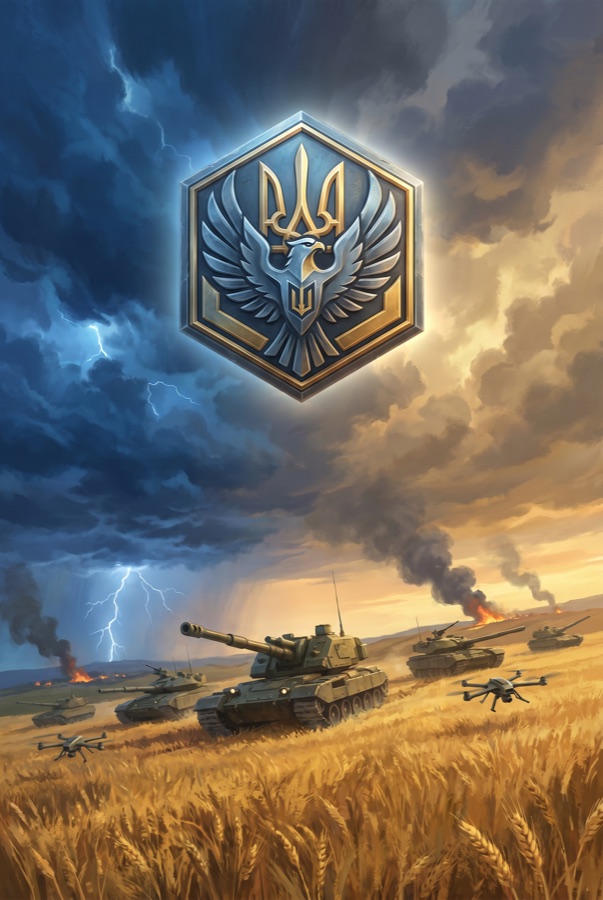
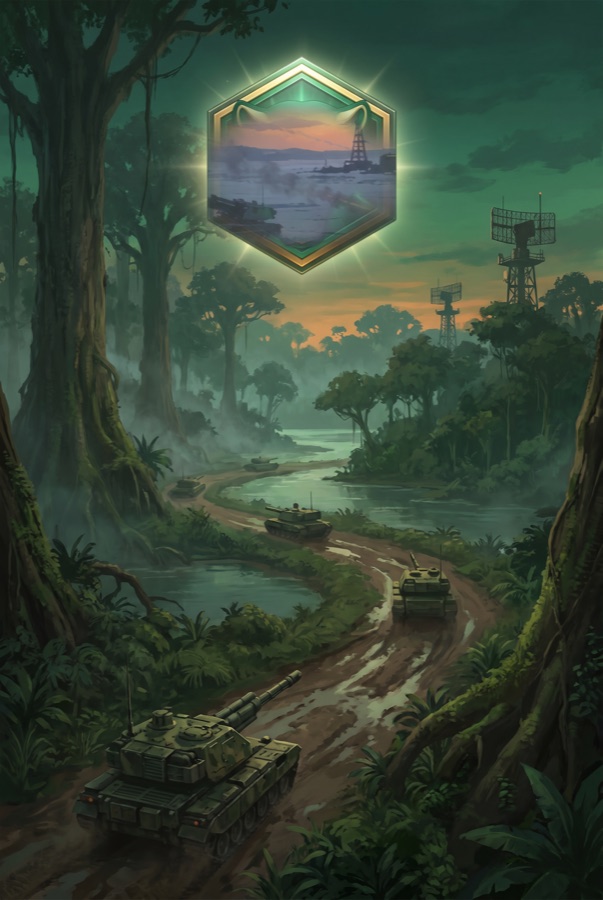
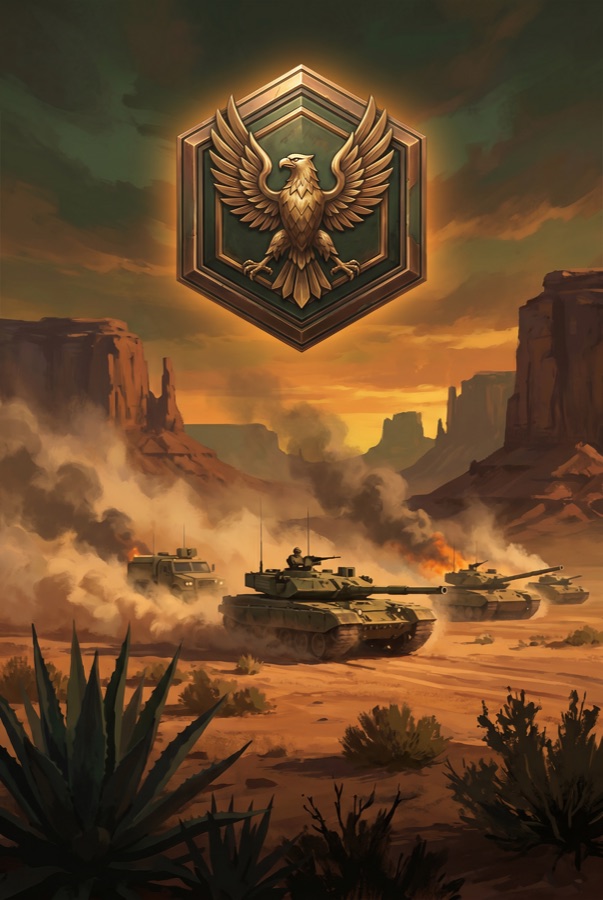
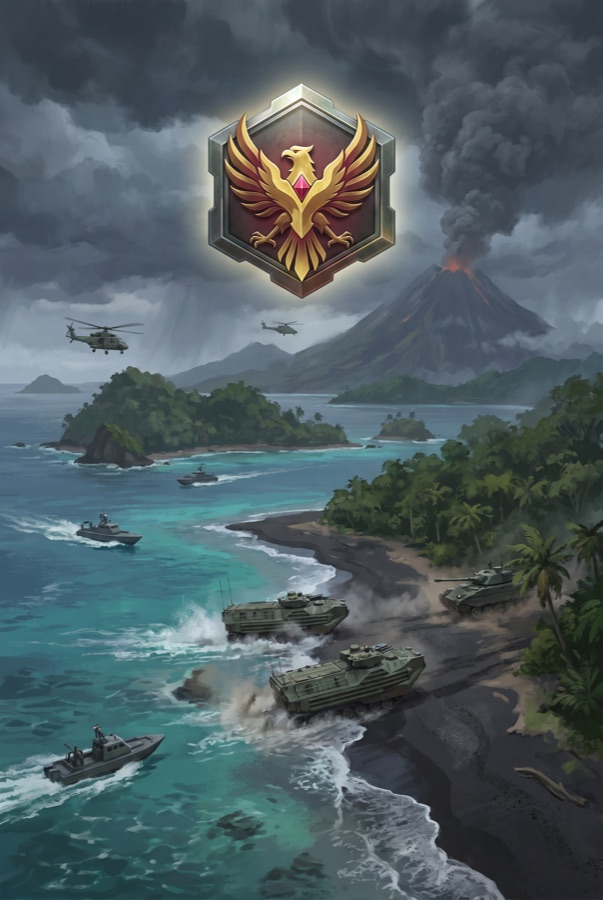
Generated for this pitch ·four player factions from one base tank, one prompt each
Oplot · Ukraine
Osório · Brazil
Jaguar · Mexico
Harimau · Indonesia
One more run each and the faction has a face · emblem and key art, same pipeline, same style as the game's official factions
Four more factions from the same pipeline
UKRAINEHold the lineBRAZILThe jungle fights with usMEXICOFast · fierce · everywhereINDONESIATen thousand islands, one army
Not a mockup · the real in-game workshop, cloning the EU roster into a brand-new Spain faction, slot by slot
Captured live · in-engine, unedited · every clip below
▶ two live edits · paint a flag & number, then reshape the turret to twin cannons · one prompt eachthe big one
▶ prompt a weapon → generated, auto-rigged & baked onto the unit · one click, mid-matchlive · in-engine
▶ swap a single part · truck → BBS wheels, just because you canlive · in-engine
▶ don't like it? one-tap revert, then try againsafety net
▶ the player-facing editor · “Edit with AI” scene, inside a real buildplayer build
07 · The competition
Tools, platforms, world models. Nobody holds the middle.
Everyone approaches this from one side. The middle seat — a live game where players generate safely and every generation is billed — is empty.
AI 3D tools
Meshy, Tripo, Luma: strong generation, sold as a tool. No game, no players, no distribution. They can copy the model; they cannot copy a playable title.
UGC platforms
Roblox and UEFN own player creation at scale, and it is all pre-made blocks. Letting raw generation in would break their games; constraining it is not what their stack was built for.
Not another AI-generated game
World-model games dream frames on a server farm. DoctrineStrike is a real engine build that runs on today's hardware, where AI generates the content, not the frames. Different genre, different market, no head-on rival.
Real generationA game that already plays
AI 3D toolsMeshy · Tripo · Luma
EmptyDoctrineStrike
World-model gamesresearch, not products
UGC platformsRoblox · UEFN · pre-made blocks
First with all three: a playable title, a safety layer and a credit economy. That combination is the category.
08 · The moat
Player content that never breaks the game.
The first question every platform asks about player-generated content: “how do you stop the bad stuff?” Two layers, neither of them a filter bolted on afterwards.
Player prompt
→
Layer 1Prompt railsLocked scale, role and style. The bad stuff is hard to even ask for.
→
Layer 2AI refereeReviews every output. What slips through never reaches a match.
→
In the game
▶ real capture · the AI referee catches an off-spec prompt and rejects it · in-engine, unedited
Raw generation vs constrained generation
Everyone else Raw generation
Drifts off-style at random scale and breaks the game.
Moderation bolted on afterwards; NSFW / IP leaks.
You get a “mesh,” not something playable.
DoctrineStrike Constrained generation
Slot & role rules → always fits, always on-brand.
Forced style + role = moderation built in, no extra filter.
You get a rigged, combat-wired unit.
player types: "a flying tank with wings" (in the TANK slot)
engine locks: role = ground vehicle · tracks · turret · house style
result: an on-brand tank · the off-theme part never renders
How the rig and the style lock work
Auto-rig & snap
Tripo auto-rigs the mesh; a hidden prompt forces three-quarter view, Z-axis and a fixed scale per class, so the result snaps into the slot already combat-wired.
Player-safe controls
Transform-style tweaks (position, rotation, scale), quality tiers low → ultra and a one-tap revert, all bounded so a player can refine the build but never break it.
An AI referee on every output
Before a creation enters the game, an AI check answers two questions: is it the class this slot expects, and is it safe? Prompt a cat in the tank slot and it never reaches a match.
Balance-locked stats
Custom units clone their combat stats from an existing unit; the player restyles the look, never the numbers. Nobody prompts a tank that shoots across the whole map, so creativity stays unlimited and the match stays fair.
09 · Proof & milestones
A complete game, powered by GameGen.
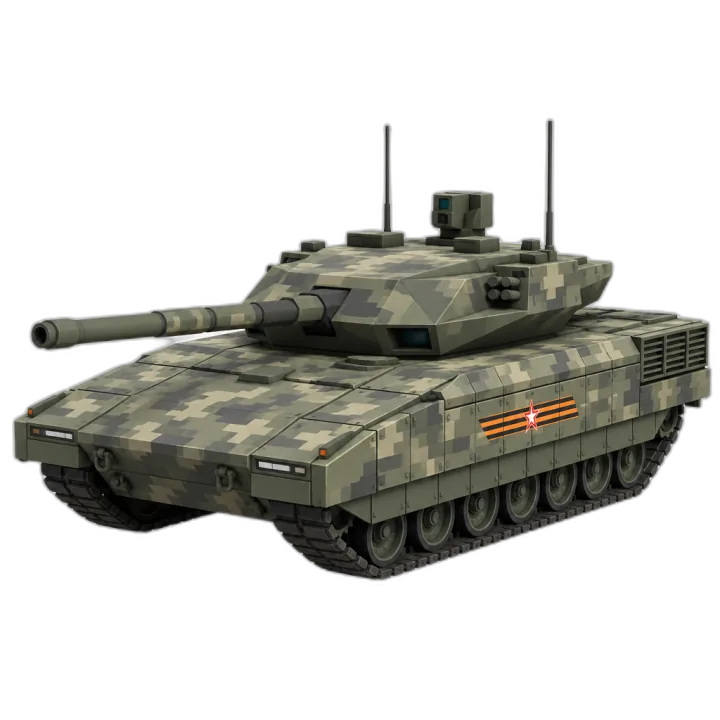
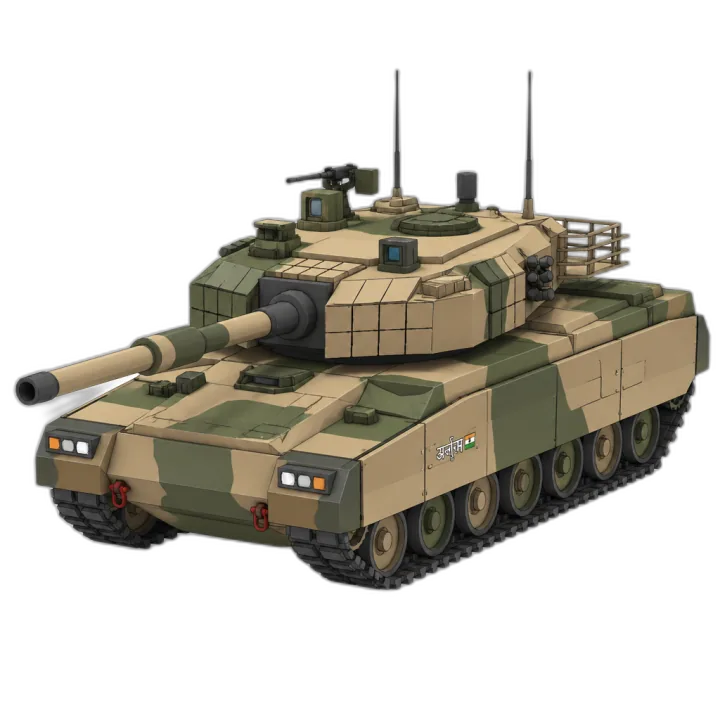
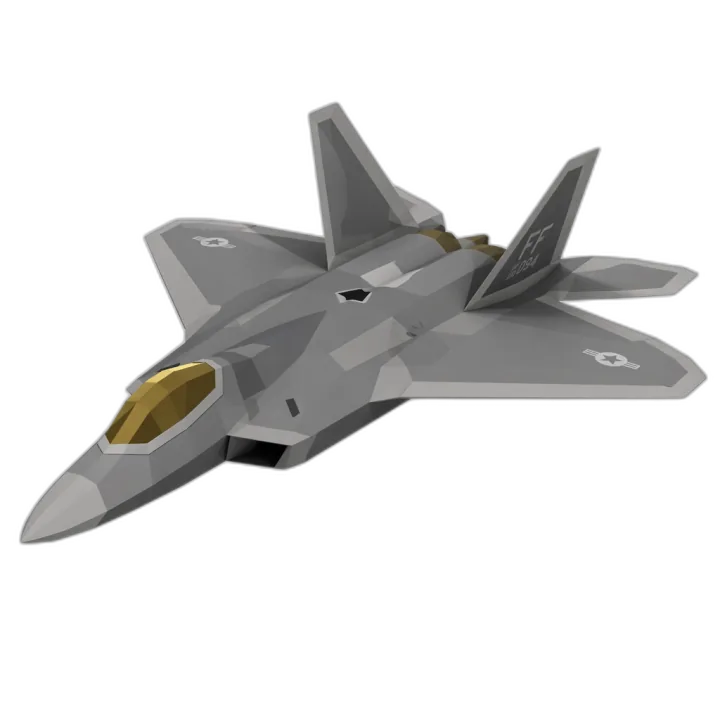
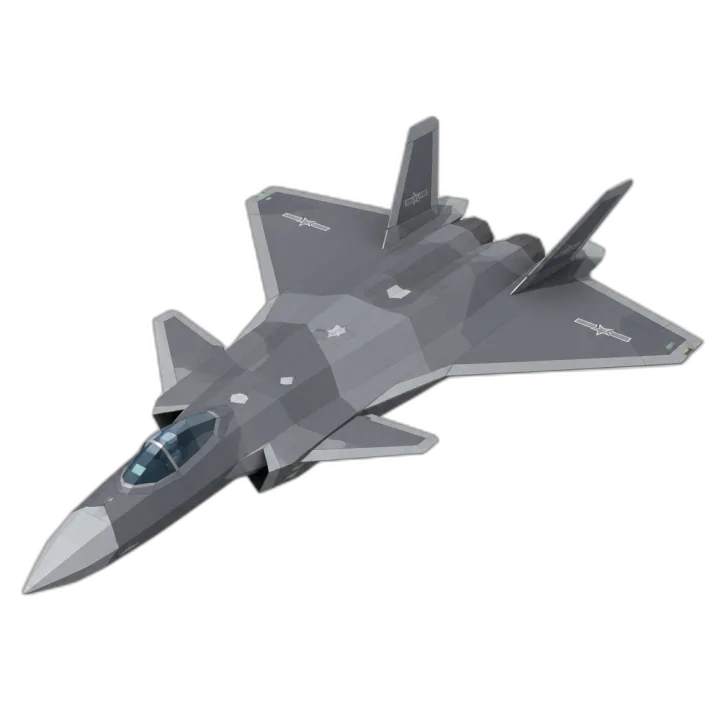
Teams pitching this thesis usually bring mock-ups. We bring DoctrineStrike, a complete RTS whose entire art library is AI-generated. Every unit below was generated from a prompt, in one coherent style, then rigged and wired to play:
M1A2 · USA
T-14 · Russia
Leopard 2 · EU
Arjun · India
F-22 · USA
Su-57 · Russia
J-20 · China
Typhoon · EU
AH-64 · USA
Karrar · Iran
BMPT · Russia
Rafale · EU
The map is the planet. Players type a place and play it. Terrain comes from open geographic data, so the content pipeline has no end and no marginal cost: every earthquake, every stadium, every city in the news is a map the same day. The category we are building is not a strategy game with AI inside. It is the first game where the world itself is the content pipeline.
183
Playable units and buildings generated, plus every icon, projectile and prop. 6 factions, one style.
1 click
Prompt → playable unit, fully automated. Built for any model as the default backend: drop-in, no rebuild.
Live
Working demo and full walkthrough: this site, plus the in-engine editor.
NOW playable pre-alpha · art library & generation pipeline
complete · single-player vs AI · game systems in progress
multiplayer is post-launch — Aziz's Photon Quantum background
is why we can build it, not a claim that it is built
15 OCT the Steam page goes public · wishlists open
LAUNCH free-to-play: the game is free, players pay to generate.
Early Access opens when the wishlists say so
Ready for⬢ ANY MODEL
Where the audience comes from.
We built the product before the audience, on purpose: two people could ship one of those, not both. The reach is ahead of us, not behind us — and it is dated. That distance is what this round buys.
15 OCT
The Steam page goes public. Steamworks onboarding is complete and the page opens on 15 October 2026. Wishlists are the pre-launch number that matters.
Day one
Creator seeding. Starts the day the Steam page is live: RTS and modding creators get early access and credits, pointed at the wishlist.
Next
Early Access, dated by the wishlists. It puts the workshop in players' hands: the first real read on how much they generate, and the input to every projection above.
10 · The partnership
The partner drops in: one setting.
The pipeline is built around clean slots, so the partner needs no custom integration. Four stages are wired and waiting; switching the backend is a single selection. No code, no rebuild.
The game ships free-to-play
With a sponsorOn the partner's model
Without oneOn current vendors
Upside, not a dependency
Drop-in backend
The partner's model becomes the generation engine of a launch-ready RTS. Integration is one asset in the Workflows library, not a project.
A “Made with” credit
Like “Made with Unity”: a credit on a real published title (store page, trailers, credits). Proof that your tech ships real games.
On-brand by default
Style injection keeps every image the partner returns on-model, which means fewer retries and a lower cost per asset.
TODAY AFTER ONE SETTING
Text→Image: current vendor → the partner
Image→Mesh: current vendor → the partner
Verification: our referee layer · model-agnostic · unchanged
Each slot is wired and waiting. Flip it to the partner and the whole game runs on their model.
11 · The marketing plan
Every player creation is a clip.
The product manufactures its own marketing: every generation is a before-and-after moment built to be filmed. In Where Winds Meet, one face-scan feature filled YouTube with clips. Our whole game is that feature, times every unit, skin and faction a player can imagine.
15 OCTthe Steam page goes public
Steam first
The Steam page goes public on 15 October 2026. Wishlist campaigns start there, and the wishlists set the Early Access date.
1,000creators seeded before launch
Creator seeding
Seed credits put the first thousand creators to work before launch. Their builds fill the prompt exchange, and every viral clip converts into paid generations.
Co-marketing with the partner
Launch rides both channels. Every player build doubles as an ad for the game and for the partner, so both sides fund the push.
Two people build the game. The channels run on an in-house AI marketing stack, agent-operated with human sign-off.
12 · The team
Built by two people.
Who is behind this: two people, in months. Everything on this page, the 183 units and buildings, the pipeline and the live demos included.
The studio has shipped before: Battle Derby, a live F2P mobile title, profitable with positive ROAS and an esports collab with Team Heretics. It shipped with an on-chain collectibles layer, which is exactly why DoctrineStrike has none: credits are credits, priced in the partner's currency, with no token and no wallet. Grant-backed (Canarias Financia · ERDF), operating under the Canary Islands ZEC 4% corporate-tax regime.
Isidro Quintana
CEO · AI agents · marketing
Twenty years shipping games and film. Eleven running PromineoStudios on licensed IP for Disney, Warner and Marvel, with a PAX East showcase and a GDC finalist. Runs brand, community, Steam and the investor side.
Nine years of Unity, senior in Photon Quantum multiplayer, full-time on the game. Built the RTS and the generation pipeline: 183 units and buildings, six factions, the multipart builder and the in-game workshop. From prompt to combat-ready mesh in one click.
No. DoctrineStrike is an original title: our own Unity build, our own factions, and an art library generated in-house. We reference a genre, the modern military base-builder, not a franchise. There is no licensed IP in the game.
What if no model partner signs?
The pipeline is model-agnostic by design: four stages, any backend, one selection to switch. The game ships free-to-play either way, on the current vendors until a partner takes the slots. A partner changes the backend and the reach, and the product exists without one.
Two people cannot run a live game with an economy.
Correct. Two people built it; the round hires the team that runs it. Having a game that already plays end to end is what makes those hires operational rather than exploratory, and it is why the round funds launch and reach instead of development.
Who is liable for what players generate?
Nothing a player generates reaches another player without passing the referee. Prompt rails constrain what can be asked for, the AI check rejects whatever does not fit the slot, and the marketplace only lists what already cleared both.
● The round
Own the engine of the first generative game economy.
Roblox proved players will build. Fortnite proved a free game prints money. AI made both programmable. GameGen sits where the three meet: a finished title, a creator layer, and a revenue share on every credit spent inside it. The category does not exist yet. That is the point.
The round funds three things:
Launch
Ship the free-to-play
The Steam page goes public first and Early Access follows: servers, QA and the last mile of polish. The game plays end to end; the round buys the distance between a pre-alpha and a launch.
Creators
Seed the creator economy
Seed credits for the first thousand creators, with the prompt exchange live at day one. Liquidity first, monetisation second.
Reach
Fill the funnel
Wishlist campaigns, creator collabs and the co-marketing push with the partner. Two people build the game; the round buys the megaphone.
The shape: an 18-month runway to launch and the numbers that unlock a Series A. Size and terms are shared in the meeting.
Non-dilutive · zero cap-table cost
Private · SAFE
Public
Non-dilutive
€200k already secured: a SODECAN participative loan, closed. The rest is in flight: ENISA · CDTI Neotec · Canarias Financia · EIC / Horizon Europe, on top of the ZEC 4% corporate-tax regime. Extends runway at zero cap-table cost.
Private
SAFE
Gaming angels plus a European lead. Comparable seed rounds in this exact lane: Astrocade $12M, Series AI $7.9M (a16z Games), Bitmagic $4M (Supercell), Hidden Door $7M.
Next milestone → Series A: ~90,000 active players is $1M of annual revenue on base-case assumptions. That is the number this round buys.
The sponsorship deal on the table: structured as a recoupable advance against the studio's revenue share on in-game credit spend. They recover first; we earn after. Aligned by design.
▶ the partnership, as every player will see it · the partner at the door of the workshop · concept in the game's UI
Could a partner build this themselves? They could, and it would close the category: no studio builds on a platform that competes with its own clients.
Joshua learned the only winning move was not to play. In a new category, it is to play first.
The first step is small → a 30-minute walkthrough: the live build, the pipeline running, and the numbers behind this page.
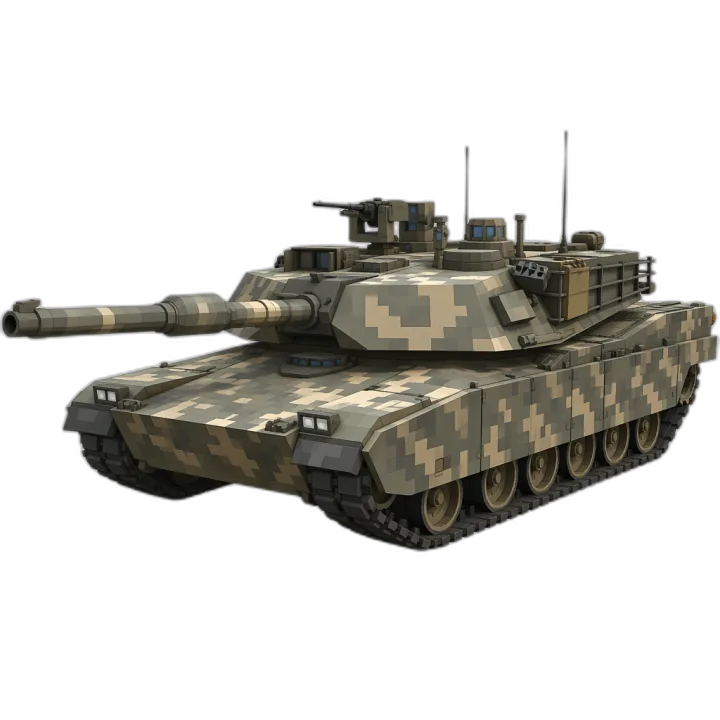 M1A2 · USA
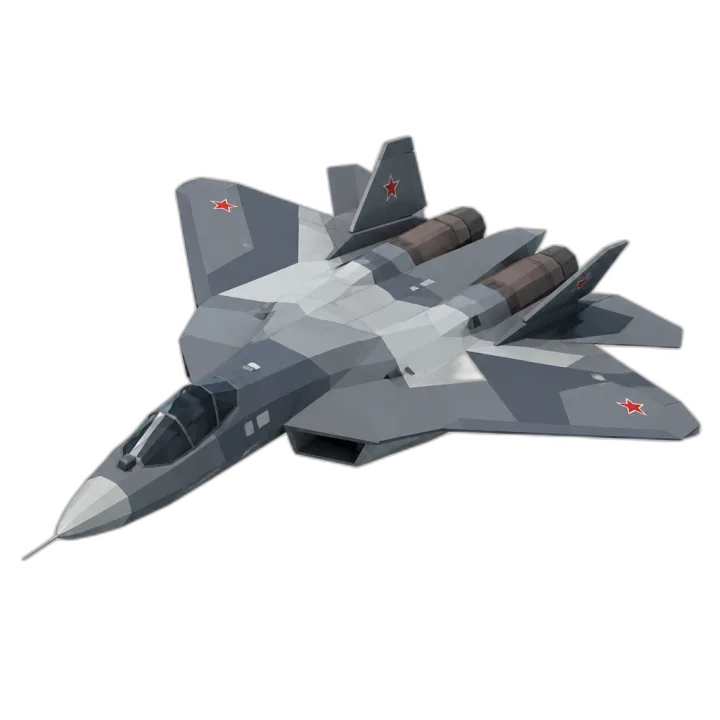 Su-57 · Russia
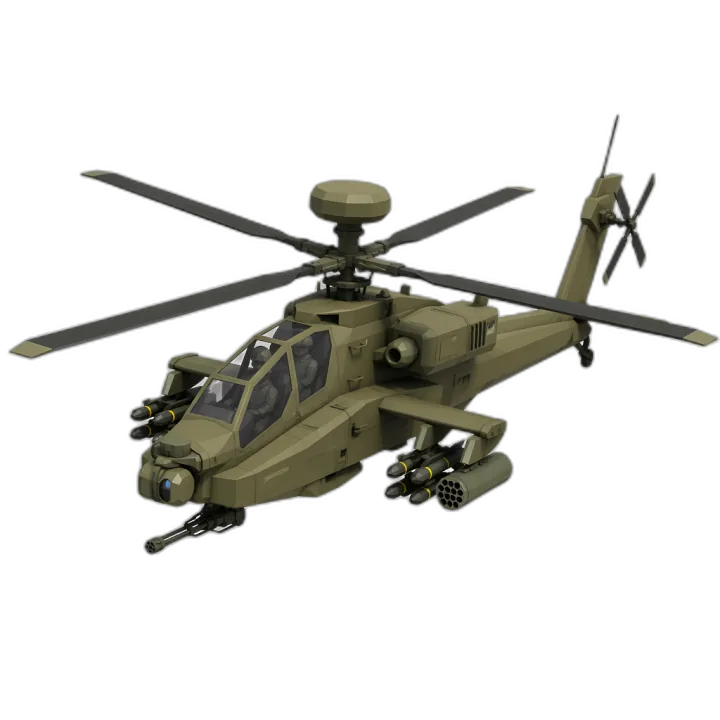 AH-64 · USA
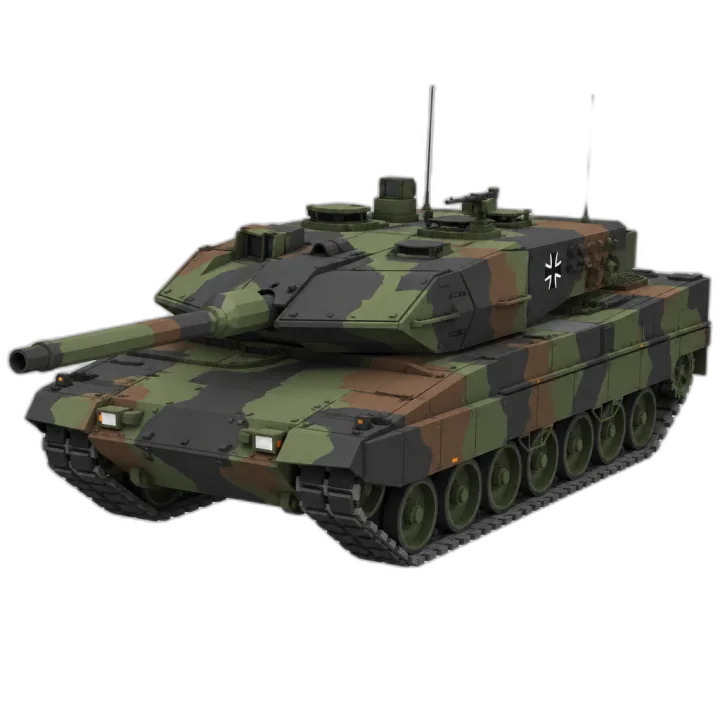 Leopard 2 · EU
 body
body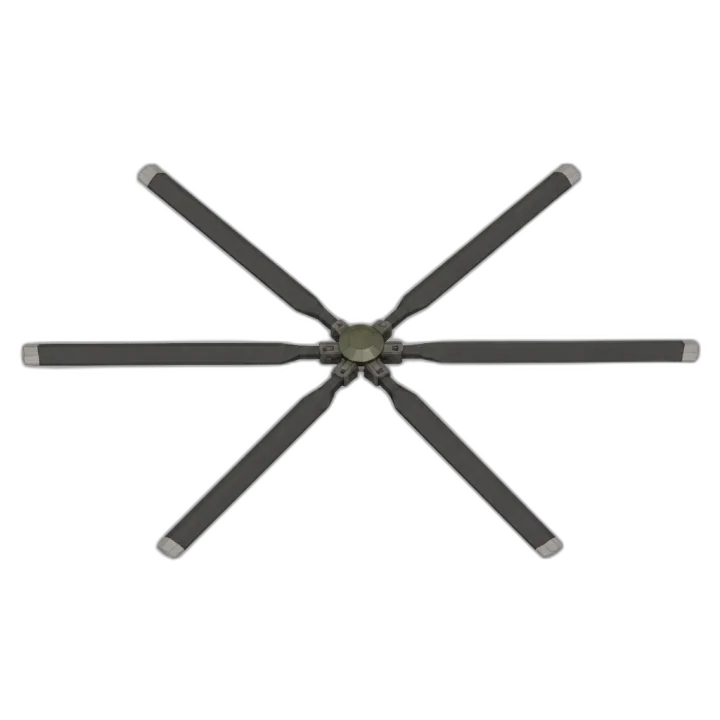 rotor · spins
 gun · auto-aim
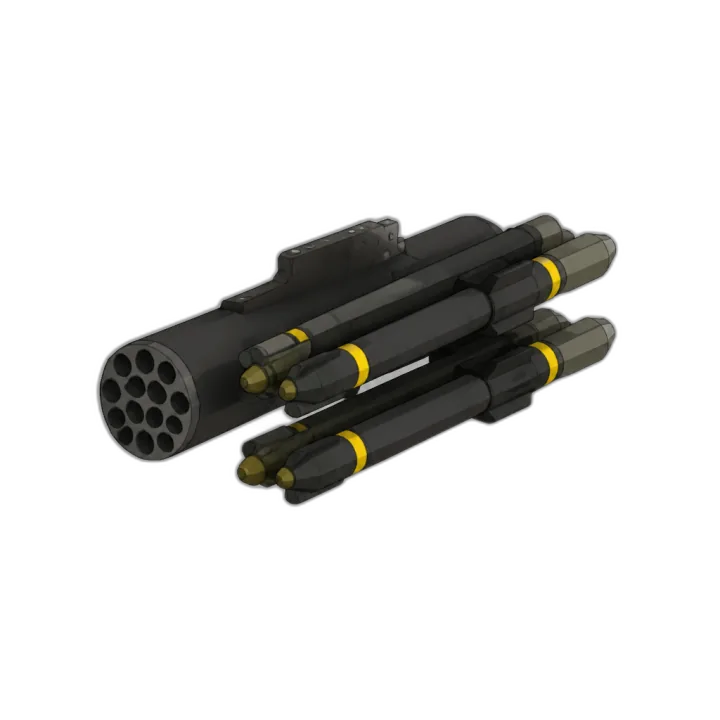 missiles · fire